Robotic Dog: Smart Pets & AI Companion Guide 2026
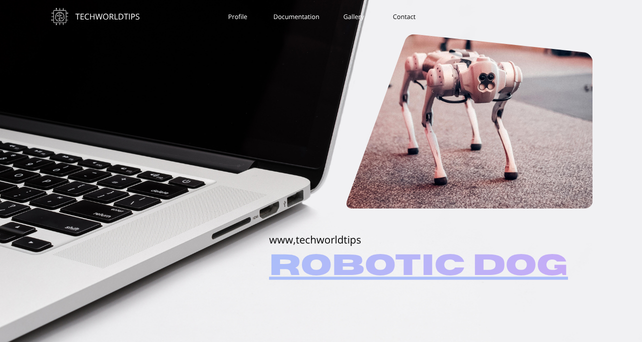
A robotic dog is a kind of hi-tech robot, that is engineered to look and act like a real dog. These smart robots are a blend of robotic mechanics, sensors, computer power, and artificial intelligence to communicate with humans and the world in a manner that is both natural and interesting. Robotic dogs are the future of consumer robotics today, whether in the entertainment, educational, companionship or industry sectors.
The current robotic dogs are much more than toys. They include advanced technologies such as AI interaction, voice and gesture recognition, autonomous navigation, and even emotion-like reactions. Robotic dogs are changing the idea of what robots are capable of, whether as adorable playful pets or as powerful quadrupeds in research and industry.
Evolution of Robotic Dogs – From Simple Toys to Intelligent Companions
Robotic dogs first emerged as mere electronic pets in the late 20th century. The initial models responded to simple stimuli such as touch or to simple commands, and they seldom moved in realistic motion. However, decades later, the field of robotics shifted away to remote-controlled toys, to AI-powered companions. The current models apply deep learning and improved sensor systems that make them dynamic and responsive.
With the advancement of AI and machine learning, robotic dogs started to develop behaviors, rather than merely perform a script. These robots are now able to understand voice commands and detect human presence, and navigate physical worlds with more autonomy. This capacity has seen robotic dogs gain popularity among children and even among adults, researchers, and even industrial users.
Core Technologies Behind Robotic Dogs
Artificial Intelligence (AI)
The advanced robotic dogs are powered by AI. It enables:
- Human command recognition and interpretation.
- Learning of patterns to enable long-term behavior adjustment in robots.
- Emotional interpretation to simulate reactions such as happiness or attention.
This implies that the robot will act in a different way as it will keep on interacting with its owner.
Sensor and Perception Systems
Modern robotic dogs incorporate several sensors including:
- Cameras (vision and facial recognition)
- Touch sensors (to react to physical contact)
- Infrared (obstacle detection) and ultrasonic sensors.
These characteristics enable free and natural movement without colliding into the hindrances.
Locomotion and Mechanics
Robotic dogs in contrast to the static robots possess complex mechanical designs:
- Four LE walking and running.
- navigating uneven terrain balance systems.
- Actuators that generate dynamic movement like actual animals.
The mixture allows them to move about in the real world rather than rolling around on wheels.
Connectivity and Apps
A variety of contemporary models are linked to smartphone applications to:
- Custom command programming
- Updating behaviors
- Remote control features
This improves the usability and increases the personalization of interaction.
Top Categories of Robotic Dogs in 2026
There are currently two main categories of robotic dogs that are generally divided into use-cases. Each is addressed to a different audience and to a different purpose:
Companion Robots
They are made with the main purpose of emotional appeal and pet-like companionship. They react to touch and voice and even identify individual members of the family.
Educational Robots
These editions are designed to educate children and adults on robotics, coding and AI. They permit programmable programs and interactive education.
Entertainment and Toy Robots
A bit cheaper and lighter, they are usually aimed at children, with easy games, tricks and reactions. They may lack the depth of AI found in high end models but they still offer interactive fun.
Industrial and Research Quadrupeds
This group comprises highly powered robotic dogs such as sophisticated quadrupeds applied in industrial inspection, scientific research and intricate navigation missions. They are constructed to take up rough roads and life situations.
Features You Should Know Before Buying a Robotic Dog
Making a decision about a robotic dog, it is important to focus on several main points that determine performance and experience.
Voice Recognition and Interaction
Find models that comprehend voice commands well. Other advanced robots are able to identify various voices and change their behavior based on them, which makes them even more personal.
Autonomy and Navigation
The robotic dogs of high quality are expected to operate in an environment with minimal human control. The signs of the better hardware and software integration are the obstacle avoidance and self-directed movement.
Battery Life and Playing Time
The longer the battery life, the longer the play and interaction. There are also high-end models that have quick-charge features.
Durability and Build Quality
A strong robotic dog will be able to resist falling and playing. Metal joints, protective plastics, and strong construction provide a tangible difference in terms of longevity.
App Connectivity
This is an enhancement to customization, and you can program actions, behaviors, and even connect to updates that increase performance over time.
Popular Robotic Dog Models in 2026
Despite the existence of a huge variety of models and prices, depending on their purpose and advantages, several outstanding models can be distinguished due to their sophisticated features and user ratings:
Sony AIBO – Intelligent Companion Pet
AIBO has a realistic interactive experience and is known as cloud-linked AI personality learning and expressive behavior, even though it is not just another toy robot.
Boston Dynamics‑style Quadrupeds
Robots such as Spot (and other quadrupeds) are industrial grade and are more effective in navigation, carrying loads and general multipurpose use beyond the home.
Budget Interactive Robots
Other models such as Zoomer Playful Pup are inexpensive fun products, which are voice-recognition-based products that are aimed at kids.
STEM Learning Bots
Educative products combine code platforms and programmability to learn the basics of robotics.
Practical Uses of Robotic Dogs Beyond Play
The use of robotic dogs goes way beyond entertainment:
Companionship Without Mess
A robotic dog offers an emotional connection to the household that is unable to keep a living pet due to allergies or lifestyle factors but does not need to feed, groom, or visit the veterinarian.
Therapeutic Support
Robots are now entering therapeutic environments particularly among the elderly or the people who are facing the issues of loneliness or cognitive requirements.
Education and Skill Building
Interactive play and customization options can help children and adults learn about AI, programming, and robotics.
Industrial and Professional Application
Advanced quadrupeds are used to aid inspection, search and rescue, and research when it can be dangerous or inefficient to send human beings.
Challenges & Limitations in Robotic Dog Technology
The possibilities of robotic dogs are enormous, though they also have real issues:
Cost Barriers
Luxury models may be costly thus being unaffordable to a large number of consumers.
Realism vs. Expectation Gap
There is a certain group of people who want the robotic dogs to exactly resemble real pets. Although interaction may be deep, actual copying of emotions is still minimal.
Dependency on Connectivity
Some robots use cloud services to have advanced functions. Those features can be restricted without a stable internet connection.
Future Trends in Robotic Dog Development
Robotic dogs will have a future:
AI‑Driven Emotional Intelligence
Robots will become highly sensitive to human emotions and will be able to adjust their behavior in subtle ways.
Enhanced Mobility
The dynamic locomotion research will proceed and result in more fluidly moving robots in dynamic environments.
Integration With Smart Homes
Robot companions can be used as mobile IoT nodes and help with reminders, security, and even routines.
Conclusion
Robotic dogs are no more a dream of the future, it is real, innovative product that adds values to life in various dimensions. Looking to get a playful pet, a learning robot, a strong assistant to help with work, or almost any other purpose, there is a robotic dog. As AI, sensors and robotics engineering keep developing, these smart machines will impress and develop in significant ways.
Frequently Asked Questions
A robotic dog is an AI-powered robot designed to act like a real dog, offering interaction, learning, and smart features.
A robotic dog uses sensors, AI technology, and motors to move, respond to commands, and interact with users.
People use robotic dogs for companionship, education, entertainment, security, and research purposes.
Yes, robotic dogs help kids learn technology, improve creativity, and enjoy interactive play safely.
Robotic dog prices vary from affordable toy models to advanced AI robots costing hundreds or thousands of dollars.





Post Comment