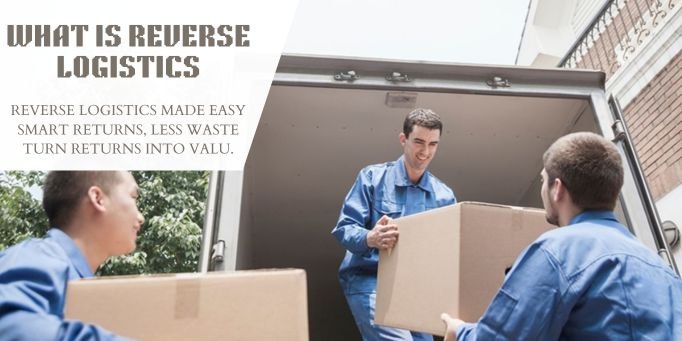
Reverse Logistics: Complete Guide for Modern Supply Chains
Contemporary supply chains are not merely concerned with getting products manufactured and shipped to the market. In most cases, the supply chain also has to deal with products flowing back in the supply chain as returns, as repairs, as recycling or resellable products and that is referred to as reverse logistics. Reverse logistics deals with the flow of products in a reverse direction unlike the conventional logistics, which revolves around the forward flow of goods between the production and the final customer. Reverse logistics is also becoming significant in logistics technology due to the rapid expansion of e-commerce and lax return policies, as it enables businesses to achieve value on returned products, minimize waste, enhance customer satisfaction and boost business operations generally.
Key benefits include:
- The recovery of value on returned products.
- Waste minimization by recycling and reusing.
- Enhancing customer satisfaction with simple returns.
- Optimizing the supply chain.
What is Reverse Logistics?
Reverse logistics is a concept of returning goods to the customer to the retailer, manufacturer or warehouse and to recycle their value or dispose them accordingly.
The reverse flow of products in the supply chain may be easily described in simple words.
As an illustration, when a customer decides to send back a good that he or she bought online, he or she sends it back to the company. The product is then checked by the business and either stored back or repaired, recycled or discarded.
Common situations where reverse logistics occurs include:
- Customer returns in products.
- Re-use or disposal of waste materials.
- Repair or renovation of faulty products.
- Selling back the unsold inventory to manufacturers.
- Safety-related product recalls.
All these are the activities that are included in reverse logistics process.
Why Reverse Logistics is Important for Businesses
Reverse logistics has become a significant aspect of the current supply chains particularly in those sectors where returns on the product are popular.
The development of online shopping is one of the primary reasons why companies pay attention to the reverse logistics. E-commerce sites have easy-to-use policies on returns, implying that companies have to deal with massive returns.
Another objective of the reverse logistics is to contribute to the sustainability process by minimizing waste and promoting recycling.
Reverse logistics is important due to some of the following reasons:
- Recovers values of the products that are returned.
- Enhances customer satisfaction by providing convenient policies of returns.
- Recycles waste to the environment.
- Helps businesses examine product problems and enhance quality.
- Favors circular economy plans.
Owing to these advantages, reverse logistics has become one of the strategic components of supply chain management in many companies.
Key Components of Reverse Logistics
The effective reverse logistics system is a combination of multiple processes that provide the effective management of returned goods.
Product Returns Management
The most typical aspect of the reverse logistics is product returns. The reason why customers could make returns was a defect in the products, incorrect sizes, damage in shipping, or dissatisfaction with the product.The companies should develop distinct policies and effective mechanisms to take care of these returns.
Inspection and Sorting
When a product is returned it has to be inspected to determine the condition of that product. It is then sorted into the various categories of usability of the product.
Common categories include:
- Products that are replenishable and re-marketed.
- Repairable products.
- Refurbishment products.
- Products that have to be recycled or discarded.
Inspection in proper manner makes the businesses get maximum value out of the returned items.
Refurbishment and Repair
There are some of the returned items that are repaired or refurbished. The products are later resold as refurbished items at a reduced cost after repairing.
This assists the companies in minimizing losses and increasing product life cycle.
Recycling and Disposal
Un repairable products are usually recycled. Recycling enables firms to recycle precious raw materials and minimize environmental harm.
Disposing of products of hazardous material in a responsible manner is also important.
Types of Reverse Logistics
The concept of reverse logistics incorporates various processes based on the nature of the product and the cause of the recalls.
Returns Management
This is the simplest form of reverse logistics and entails customers returning products which they do not desire anymore.
Remanufacturing
Returned products under remanufacturing are reassembled under repair or using new components to make them act as new products.
Refurbishment
Refurbishment refers to cleaning, repairing and testing of products and reselling them.
Recycling
Recycling is oriented towards reusing used items like plastic, metal or glass.
Unsold Inventory Returns
Manufacturers are sometimes given back the unsold products as returned by the retailers. This assists in controlling the surplus inventory and cutting the losses.
How the Reverse Logistics Process Works
Several steps are involved in the process of the reverse logistics to ensure that the process of dealing with the returned products is efficient.
The process normally entails the following steps:
- Return request is initiated by the customer.
- The product gets returned to the warehouse.
- The outgoing product is checked and categorized.
- The firm is able to make decisions on whether to restock, repair, recycle or dispose the product.
- The product is delivered to the right destination.
Technology contributes significantly in the control of this process. Logistics software assists companies in monitoring the returned products and optimize the operations.
The effective reverse logistics systems will cut the processing time and enhance the performance of the supply chain.
Benefits of Reverse Logistics
There are various benefits of implementing a good reverse logistics strategy to businesses.
Cost Recovery
Returned products can also be repaired, refurbished or resold back to businesses, which helps to recover value lost by disposing them.
Improved Customer Experience
Customers get satisfied and have trust in the ease and clear cut return processes.
Environmental Sustainability
By recycling and refurbishing products, one will reduce domestic waste and also contribute to the sustainability of the environment.
Better Product Insights
The use of return data assists firms in determining the problem with a product or its design.
Key benefits include:
- Reduced operational losses
- Increased customer loyalty
- Improved product quality
- Sustainable business practices.
Due to these advantages, reverse logistics has now become an agenda of most organizations.
Challenges in Reverse Logistics
Despite the numerous advantages of the reverse logistics, the reverse logistics have a number of challenges.
Return management may be a complicated and costly task. One has to plan the transportation, warehouses, and inspection.
The following are some of the typical reverse logistics dilemmas:
- Transportation and processing are expensive.
- Volatility in volumes of returns.
- Problem with re-managed inventory.
- Environmental regulation and compliance.
- Complicated logistic processes.
Companies are embracing modern technologies like automation and data analytics in order to overcome these challenges.
Reverse Logistics in E-Commerce
The e-commerce companies are characterized by high return rates than the traditional retail outlets.
The customers usually place orders on several goods and refund those products that fail to satisfy them. Some of the most returned product categories include clothing, electronics and footwear.
The online retailers invest in sophisticated systems of reverse logistics to manage such returns.
These systems often include:
- Automated return portals
- Intelligent warehouses with product scanning.
- Return pattern analysis data analytics.
- AI predictive systems on the rate of returns.
Through advancement in the processes of reverse logistics, e-commerce firms are able to save costs and increase customer satisfaction.
Technologies Transforming Reverse Logistics
Technology is contributing significantly in enhancing reverse logistics.
The digital tools assist modern logistics companies to track returned products, analyze the data on returns, and optimize supply chains.
Reverse logistics involve some significant technologies such as:
- Return prediction Artificial Intelligence.
- Product tracking Internet of Things.
- Automation systems in warehouse.
- Logistics platform, based on the cloud.
- Data analytics tools
The technologies assist businesses in faster and efficient management of returns.
Real-World Examples of Reverse Logistics
Reverse logisticians strategies have been employed as a way of enhancing sustainability and retrieving value of products by many organizations.
As an illustration, electronic manufacturers tend to gather used electronics and recycle precious materials.
There are also businesses that have trade-in programs whereby customers are offered with discounts after returning old products.
Examples include:
- Smartphone trade-in services.
- Electronic components recycling.
- Sale of refurbished electronics.
- Refurbishing and re-selling of clothes.
These illustrations demonstrate that reverse logistics may generate both environmental and economic value.
Future of Reverse Logistics
Technology and sustainability programs will play a significant role in determining the future of reverse logistics.
The companies are putting more money in the systems they use to enhance the efficiency of the processes of returns and minimize the impact on the environment.
Notable future trends are:
- Artificial intelligence logistics.
- Automated smart warehouses.
- Circular chain of supply.
- Indeed, more attention to recycling and sustainability.
Reverse logistics will become an even significant component of the global supply chains as the customers are becoming increasingly demanding.
Conclusion
The issue of reverse logistics has become a critical component of the modern supply chain management. With the rise in e-commerce and the need to adopt sustainability as a universal value, companies need to establish effective product returns systems and mechanisms that will recover the value of used products.
A proper reverse logistics policy enables the companies to minimize expenses, enhance customer satisfaction, and promote environmentally friendly operations.Reverse logistics can be turned into a competitive advantage by the business with the assistance of modern technologies, including artificial intelligence, automation, and data analytics.
Businesses that invest in effective reverse logistics will be in a better position to succeed in the dynamic logistics business in the future.
Frequently Asked Questions
Reverse logistics is the process of returning products that are returned, damaged or can be recycled and place them back through the supply chain using a process of repair, reuse or disposal.
It assists businesses to retrieve value of returned goods, lessen waste, as well as, enhance customer satisfaction.
Major ones are product returns, refurbishment, remanufacturing, recycling and unsold inventory returns.
Customers do the returning, sorting, re-inpection and re-sale, repair, recycling or disposal.
It saves on operations, alleviates supply chain efficiencies, increases sustainability, and increases the trust of customers.

Post Comment